Best Paper Trading App for India (2026) — Practice Without Risk
How to choose a trade simulator for Indian stocks, what features matter, and why paper trading is the essential bridge between learning and committing real capital.
📖 5 min read · Updated 27 March 2026
Every experienced trader will tell you the same thing: they wish they had paper-traded longer before using real money. Paper trading (virtual trading) lets you test strategies using live market data without risking capital. For Indian markets, where circuit limits, T+1 settlement, and STT costs create unique dynamics, practicing with a simulator that mirrors real NSE conditions is critical.
📌 Paper Trading Essentials
What is paper trading
Paper trading simulates buying and selling stocks using virtual money while tracking performance against real market prices. You make the same decisions you would with real capital — entry timing, position sizing, exit management — but without financial risk. The term comes from the pre-digital era when traders would write hypothetical trades on paper.
Modern paper trading apps execute virtual trades against live NSE/BSE price feeds, automatically calculating P&L, tracking portfolio performance, and generating analytics on your trading behavior.
Why paper trading matters before going live
Test your strategy: You may think a strategy works based on studying charts. Paper trading reveals whether you can actually execute it in real time — with market noise, emotional pressure, and imperfect timing. Many strategies that look clean on historical charts feel very different when you're making decisions in the moment.
Build execution habits: Order placement, position sizing, and exit discipline are skills that need practice. Paper trading builds muscle memory for these execution mechanics before real money is on the line.
Understand Indian market specifics: Circuit limits mean you can't always exit when you want. Pre-open session dynamics affect your entry prices. Auction sessions create gaps. Paper trading on live NSE data teaches you these realities without paying for the lesson.
Key features of a good trade simulator
| Feature | Why it matters |
|---|---|
| Live NSE/BSE prices | Simulating on delayed data creates unrealistic entry/exit points |
| Transaction cost modeling | STT, brokerage, GST, stamp duty — these eat into real returns |
| Slippage simulation | Real orders don't always fill at the price you see; good simulators model this |
| Portfolio view | Track multiple positions, sector allocation, and overall portfolio P&L |
| Performance analytics | Win rate, average gain/loss, maximum drawdown, risk-adjusted returns |
| Trade journal / notes | Record your reasoning for each trade — essential for learning from mistakes |
Paper trading vs. backtesting — different tools, different purposes
Backtesting runs a strategy on historical data and shows you what would have happened. Paper trading runs a strategy on live data in real-time and shows you what is happening. They serve different phases of the strategy development process.
Use backtesting first to validate that a strategy has historical merit. Then paper trade it live for 2-3 months to verify that you can actually execute it in real-time conditions. Only after both stages confirm the strategy's viability should you consider real capital.
The gap between paper and real trading
Paper trading has a known limitation: it doesn't replicate the emotional impact of real money. When you're paper-trading and a position drops 5%, you think clearly. When real money drops 5%, fear and loss aversion kick in. This emotional gap means paper trading performance typically overstates real-world results by 20-40%.
The solution isn't to skip paper trading — it's to acknowledge this gap and adjust expectations. If your paper trading win rate is 55%, expect real-world performance closer to 45-50% initially while you adapt to real emotional dynamics.
How to get the most from paper trading
Treat it like real money: Use position sizes that reflect your actual capital. If you plan to trade with ₹2 lakh, paper trade with ₹2 lakh — not ₹1 crore. Unrealistic position sizes create unrealistic expectations.
Keep a trade journal: Document why you entered, what your exit plan was, and what actually happened. After 50 trades, review the journal. Patterns will emerge — certain setups work, certain mistakes repeat. This self-awareness is the real value of paper trading.
Time-limit your paper trading: 2-3 months is enough. Beyond that, the emotional gap becomes counterproductive — you become too comfortable with zero-risk decisions. Graduate to real money with small position sizes.
❓ FAQ
Can I paper trade Indian stocks for free?
Yes. DalalAI and several broker platforms offer free paper trading with live NSE data. Look for one that includes transaction cost modeling and performance analytics, not just basic buy/sell simulation.
How long should I paper trade before using real money?
2-3 months with consistent daily practice is a good benchmark. You should complete at least 30-50 paper trades to have a statistically meaningful sample of your strategy's performance.
Is paper trading available for options on NSE?
Some platforms support options paper trading, though it's more complex due to time decay, Greeks, and strike selection. If you plan to trade options, practice options specifically — don't assume equity paper trading skills transfer directly.
🔗 Related Tools and Guides
📺 Related Videos
Watch DalalAI product walkthroughs and market analysis on YouTube.
 Paper Trading Simulator
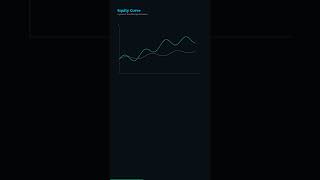 Backtest Engine — Test Any Strategy
 Stock Screener — AI-Powered Discovery
📚 Related Reading
Get Free Daily Stock Picks
AI-curated top picks, market regime, and accuracy report — every market morning.